Drain Field Repair in Woodstock, GA
A struggling drain field is the most expensive septic problem a homeowner can face, and on Piedmont clay, it’s also one of the most common. We diagnose what’s actually wrong before recommending anything, including whether repair is even on the table.
Repair-First Diagnosis
Licensed Installation
Schedule a Diagnosis
How a Drain Field Actually Works — and Fails
Once wastewater leaves the tank, it flows through a distribution box into a network of trenches lined with gravel and perforated pipe. From there, it seeps into the surrounding soil, where naturally occurring bacteria filter and break down what’s left before it ever reaches groundwater. The whole system depends on the soil being able to absorb liquid at a reasonable rate.
Piedmont red clay absorbs liquid slowly even when everything else is working correctly, which leaves less margin for error than sandier soil would. Add a tank that’s overdue for pumping, roots invading a pipe, or a shifted distribution box overloading one trench, and a field that was already working near its limit can tip into failure — showing up as standing water, backups, or a sour smell in the yard.
Catching symptoms early on clay soil matters more here than almost anywhere else in the system, because a fully saturated field on tight clay often means replacement rather than repair, and replacement fields out here frequently need a larger footprint than the original one had.
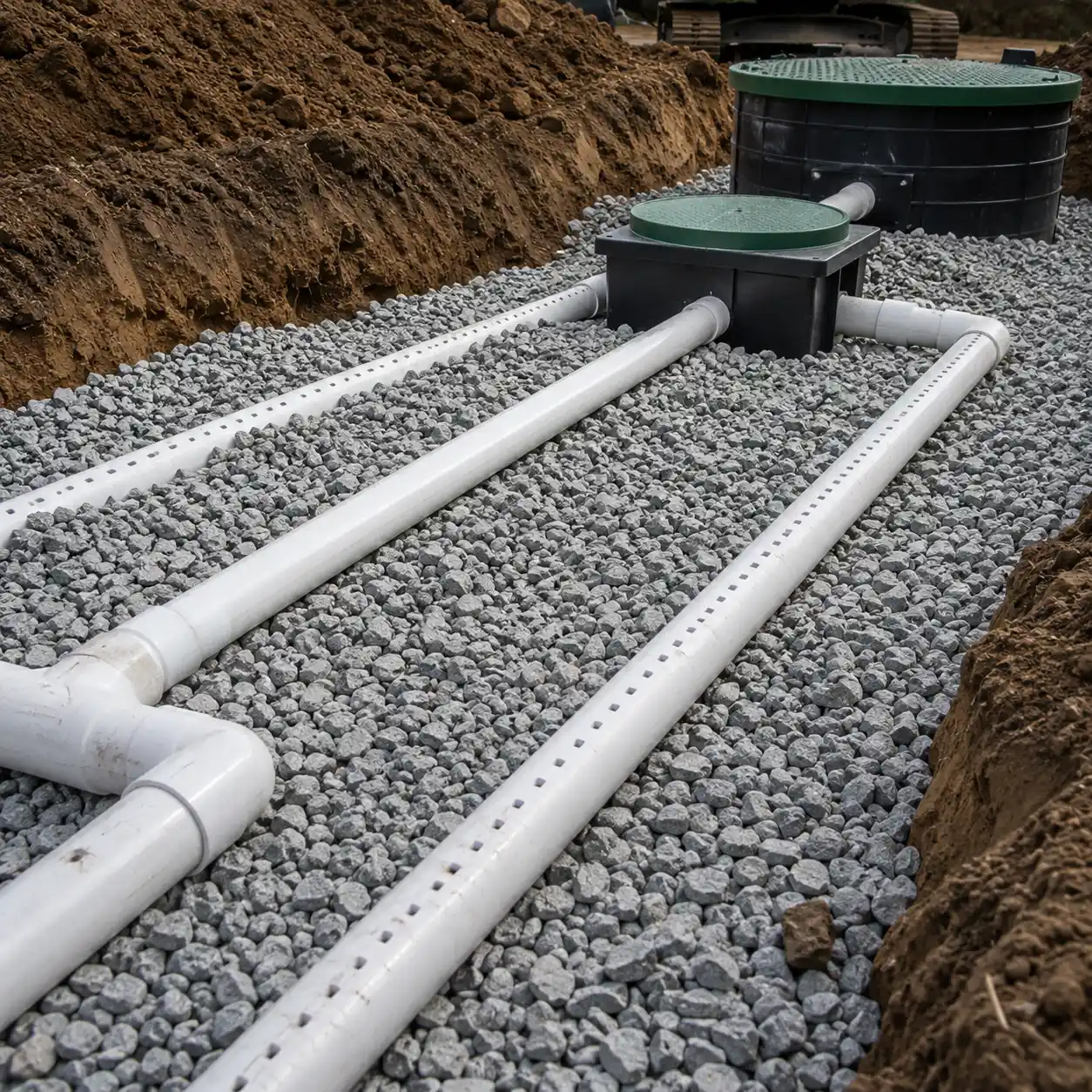
How We Diagnose & Repair a Field
We start with the least invasive step and only go further if the field actually calls for it.
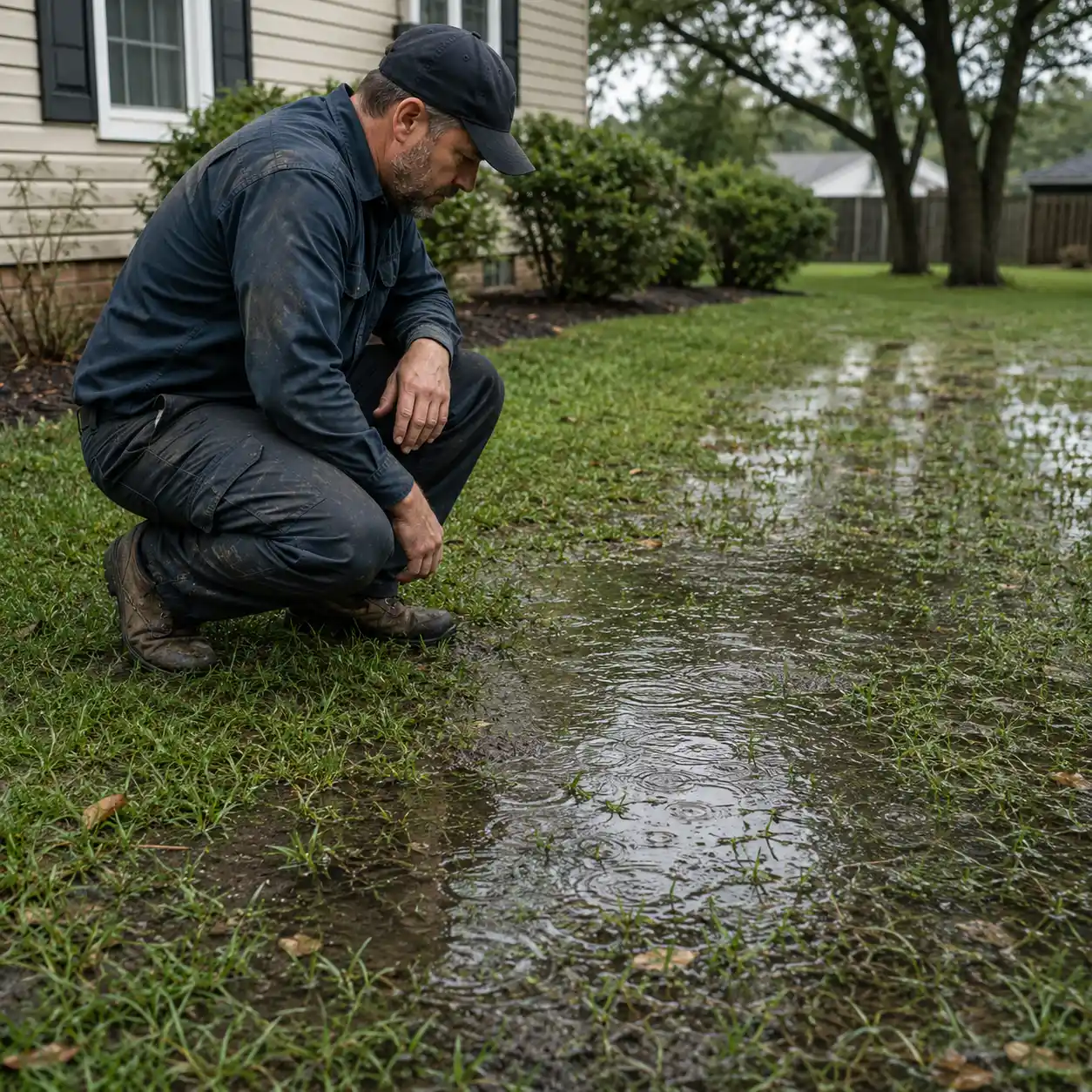
What a Struggling Field Looks Like
On clay soil, these symptoms often show up gradually before turning into a real problem:
- Standing water or unusually soft, spongy ground over the field
- A sour or sulfur smell outdoors, especially after rain
- One section of grass noticeably greener than the rest of the yard
- Slow drains throughout the house that persist after pumping
- Sewage backup during or after heavy rain, even on an otherwise fine system
- Visible sewage surfacing directly over the trenches
Because clay retains water longer than sandier soil, symptoms after heavy rain can look worse than they are — we factor recent weather into every diagnosis before making a call.
From Diagnosis to a Working Field
Diagnostic Visit
We assess the field and tank together, since the two are rarely unrelated.
Written Findings & Options
We explain what’s wrong and lay out repair versus replacement, with real cost ranges for each.
Repair or Replacement Work
A targeted repair can be a single-day job; full replacement usually runs several days.
Site Restoration
Backfilling, grading, and reseeding disturbed ground once the work is complete.
Repair vs. Replace: What Decides It
General guidance — every field gets its own diagnosis before we recommend either path.
These are common patterns, not guarantees — a proper diagnosis is the only way to know for certain.
Drain Field Work for Commercial & Institutional Properties
Churches, schools, and small commercial properties on septic often run larger drain fields than a typical home, simply because they’re sized for higher and more variable flow — a church with a big Sunday crowd puts very different demand on a field than a weekday office.
We size commercial repairs and replacements around actual peak usage, not just average daily flow, since undersizing for the busiest day is one of the more common mistakes we see on institutional systems.
We’ll also coordinate work around your operating schedule where we can, to minimize disruption.

Drain Field Repair Questions
For a targeted repair, usually with minor limitations we’ll walk you through. For a full field replacement, we’ll let you know ahead of time if you’ll need to limit water use for part of the project.
It involves real excavation, so expect visible disturbance to the area over the field for the duration of the project. We backfill, regrade, and reseed once the work is done, but full grass recovery takes a season.
Typically not, since most policies treat this as normal wear and maintenance rather than sudden damage. We’d recommend checking your specific policy, but don’t count on coverage for a standard field failure.
Sometimes, but on clay lots the replacement often needs a larger footprint than the original, which may mean shifting into new ground. County permitting will confirm what’s actually allowed on your lot.
We typically seed disturbed areas right after backfilling, but avoid heavy foot traffic or mowing on the new grass for several weeks to let it establish properly.
Drain Field Work Across Our Clay-Soil Territory
We handle drain field repair and replacement across Cherokee, Forsyth, Cobb, Bartow, Pickens, and Paulding counties, all of which sit on some form of the Piedmont clay that makes this work so common here.
Terrain varies more than people expect across that footprint — steeper, shallower ground in Pickens behaves differently than the flatter clay lots common closer to Woodstock — and we adjust our diagnosis accordingly.
- Woodstock and all of Cherokee County
- Forsyth County — Cumming and surrounding areas
- Cobb County — Acworth, Kennesaw
- Bartow County — Cartersville
- Pickens County — Jasper
- Paulding County — Dallas, Hiram
Other Septic Services We Offer
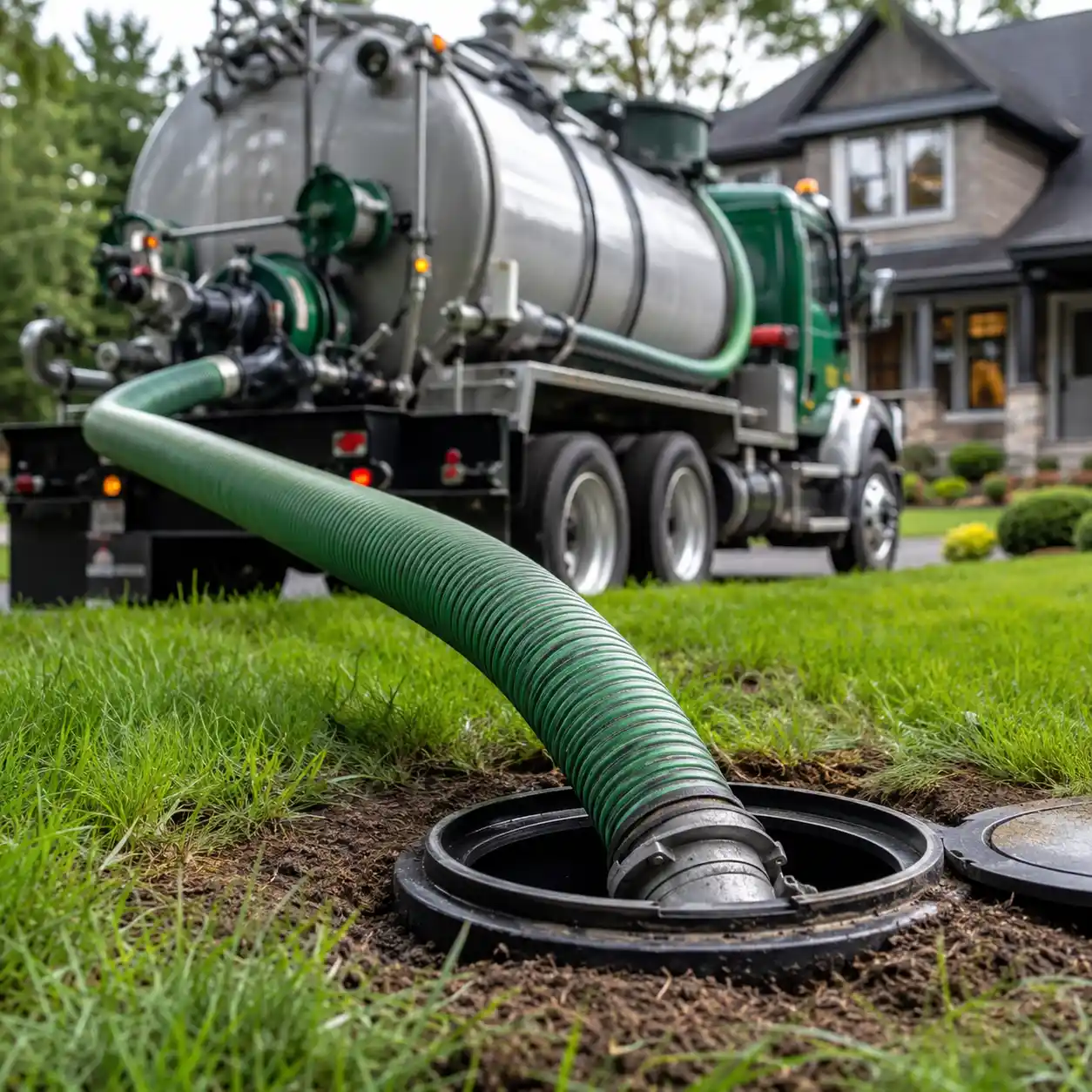
Septic Tank Pumping
Staying current on pumping is the single best thing you can do to protect a drain field from early failure.
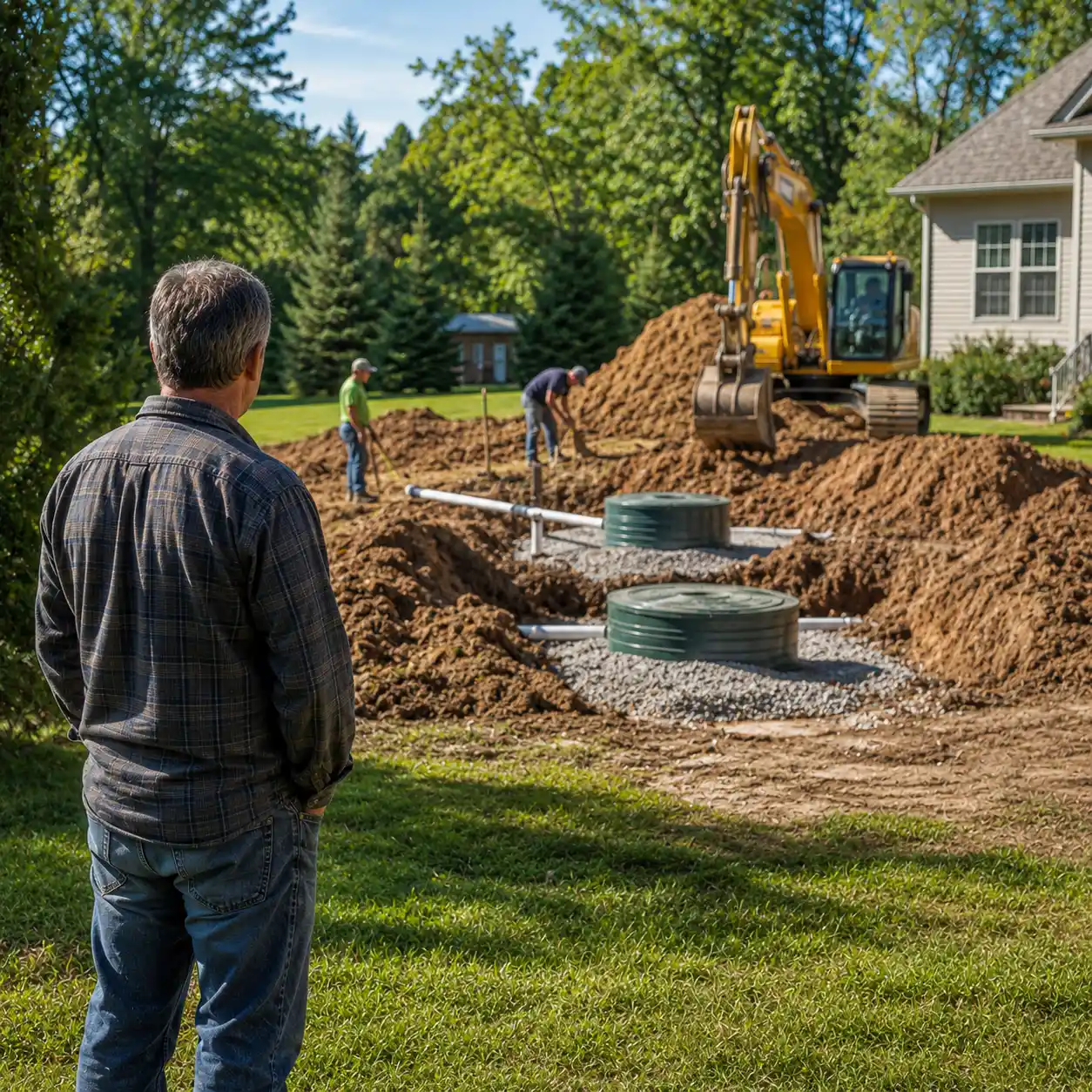
System Installation
When a field needs full replacement, this covers the permitting and installation of the new system.

Septic Inspections
A full inspection is often what first catches drain field trouble before it becomes visible in the yard.
Get a Straight Answer on Your Drain Field
Tell us what you’re seeing in the yard and we’ll get out to diagnose it, no assumptions made over the phone.
- Full field diagnostic visit
- Camera or dye testing where needed
- Written repair vs. replacement recommendation
- Targeted trench repair
- Full field replacement with county permitting
- Site restoration and reseeding included
Tell Us About Your Needs
We’ll reach out to confirm your appointment details.