Grease Trap Cleaning in Woodstock, GA
Restaurants and commercial kitchens across our service area run on a documented cleaning schedule, not a guess. We keep grease traps compliant and out of the way of a failed health inspection.
Compliance Documentation
After-Hours Options
Schedule Grease Trap Service
How FOG Buildup Actually Becomes a Problem
Fats, oils, and grease — FOG, in code language — cool and solidify as wastewater passes through the trap. The trap’s whole job is to hold that material back so only cleaner water continues on to the sewer or septic system. As FOG accumulates, the trap’s effective capacity shrinks, and it becomes less able to do that job with every service it handles.
Once a trap is full, grease starts passing through into the plumbing downstream, where it cools further and hardens inside pipes. That’s how a manageable maintenance item turns into a blocked line, a backed-up dish pit, or in some cases a violation flagged by a health or code inspector.
Most food service kitchens need cleaning every one to three months, though a high-volume fryer operation fills a trap faster than a coffee shop. Local code often sets a minimum cleaning frequency regardless of how full the trap looks on a given day, which is why we schedule commercial accounts on a set interval instead of waiting for a visual check.
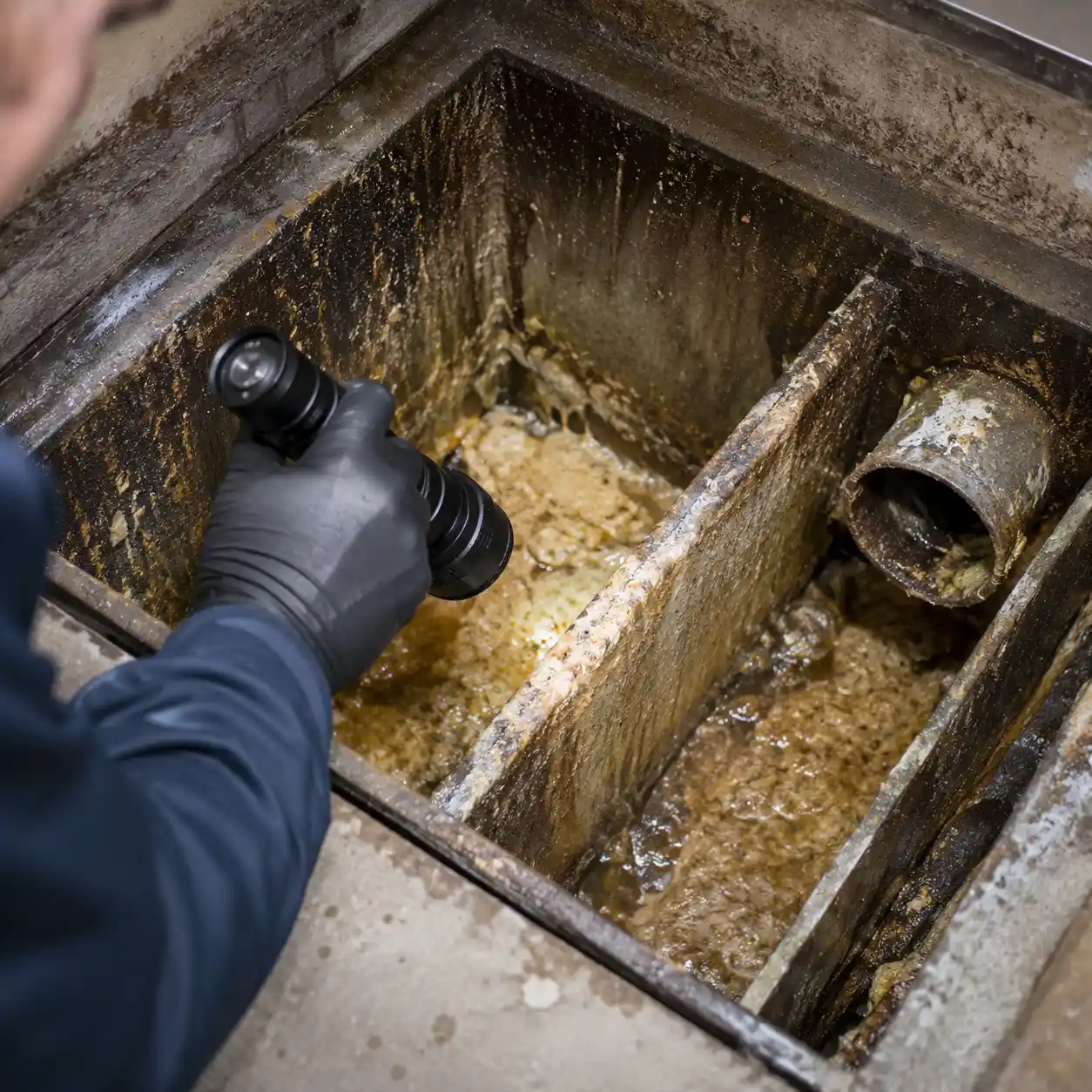
What Happens During a Cleaning Visit
Fast, thorough, and documented for your records.
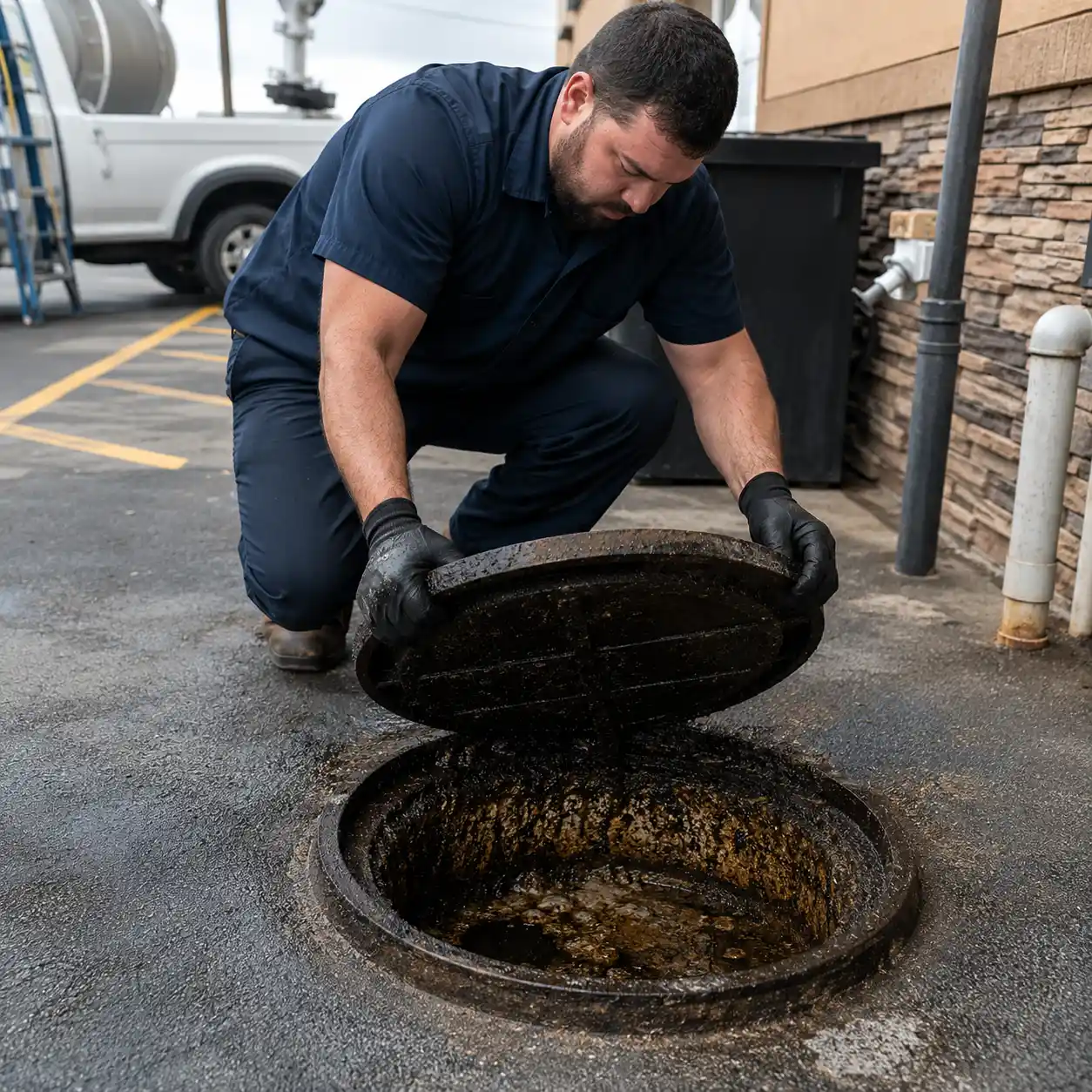
Signs Your Trap Needs Attention Now
Don’t wait for these to appear before scheduling — by the time they do, the trap is usually already overdue:
- Slow-draining kitchen sinks or dish pit
- Sewage or rotten-egg smell near the trap or kitchen drains
- Visible grease surfacing at the trap lid
- A failed or flagged health inspection related to grease management
- It’s been longer than your last known cleaning date
If you’re not sure when the trap was last serviced, that’s reason enough to get it checked.
From Scheduling to a Documented Cleaning
Schedule Around Your Hours
We can work before open, after close, or during slower parts of the day.
On-Site Cleaning
Most cleanings run 30 to 90 minutes depending on trap size and buildup level.
Baffle & Fitting Check
A quick confirmation that internal components weren’t damaged by heavy buildup.
Documentation Handed Off
A service record for your files, ready if an inspector asks.
What Actually Determines Your Cleaning Frequency
Kitchen volume is the biggest factor — a full-service restaurant running fryers all day fills a trap far faster than a small café doing mostly prep work. Trap size relative to that volume matters just as much; an undersized trap for the kitchen it serves needs more frequent attention no matter how careful staff are about scraping plates. Local code minimums, where they apply, set a floor on cleaning frequency regardless of how the trap looks day to day, and we build your schedule around whichever of these factors is most restrictive.
We track your actual buildup rate over the first few visits and adjust your interval from there rather than guessing upfront.
Built for Food Service, Start to Finish
This service exists for commercial kitchens — restaurants, food trucks with a fixed commissary, church kitchens, school cafeterias, and any other operation cooking or preparing food on-site.
We work around your operating hours, not the other way around, and we keep documentation ready ahead of routine health inspections so a surprise visit doesn’t turn into a scramble.
If your property also runs a full septic system rather than municipal sewer, we can coordinate both services on the same visit.
Grease Trap Service Questions
Yes — most of our commercial accounts prefer early morning or after-close scheduling to avoid disrupting service, and we’re set up to accommodate that.
That depends on kitchen volume, equipment, and local code minimums. If you’re opening a new location or expanding, we can help evaluate whether your current or planned trap is actually sized correctly.
It’s transported for proper disposal or recycling through licensed channels, not dumped locally. We can provide documentation of that if your compliance records require it.
If you’re on a scheduled cleaning plan with us, your service records should already be in order. Reach out if you need a copy sent quickly, and we’ll get it to you the same day.
Yes — church kitchens, school cafeterias, daycare kitchens, and any other property preparing food on-site typically need the same kind of service, whether they’re on septic or municipal sewer.
Commercial Accounts Across the Region
We service commercial kitchens throughout Cherokee, Forsyth, Cobb, Bartow, Pickens, and Paulding counties, from single-location restaurants to multi-site operations.
Set commercial routes mean predictable, repeatable scheduling for your kitchen, not a one-off call every time something starts backing up.
- Woodstock and all of Cherokee County
- Forsyth County — Cumming and surrounding areas
- Cobb County — Acworth, Kennesaw
- Bartow County — Cartersville
- Pickens County — Jasper
- Paulding County — Dallas, Hiram
Other Septic Services We Offer
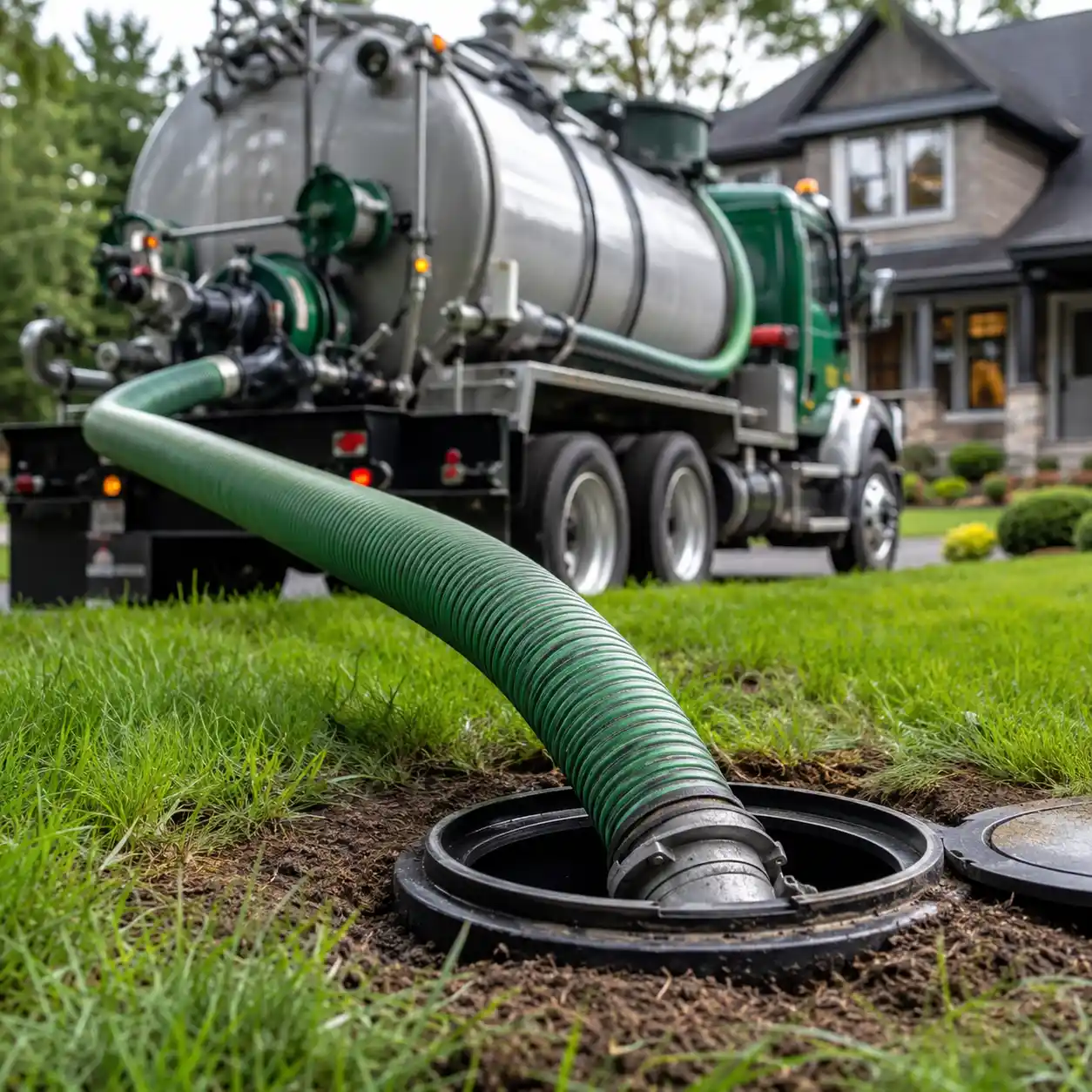
Septic Tank Pumping
For commercial properties on septic rather than municipal sewer, this can be scheduled alongside your grease trap service.
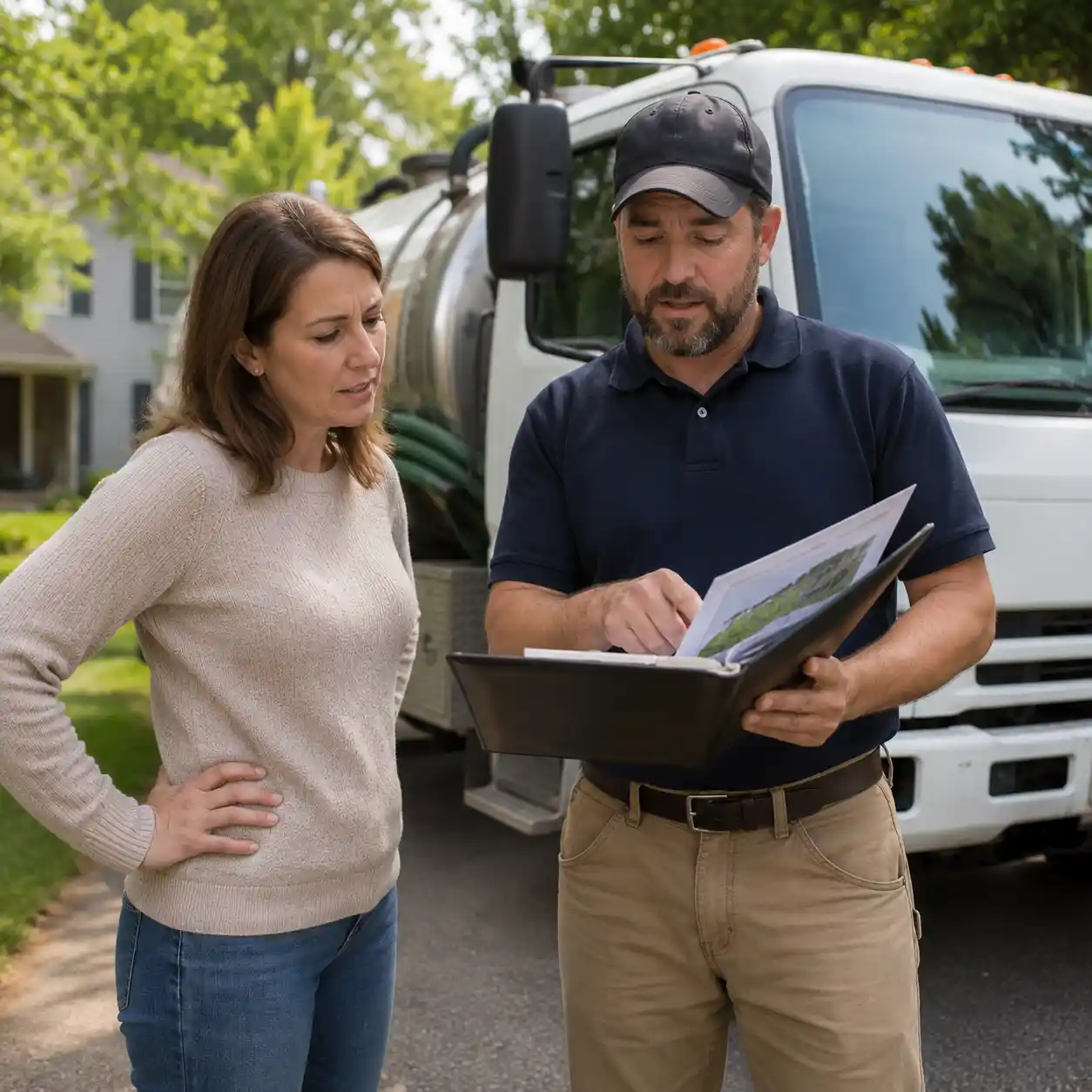
Septic Inspections
Useful when taking over a new commercial property or expanding kitchen operations.
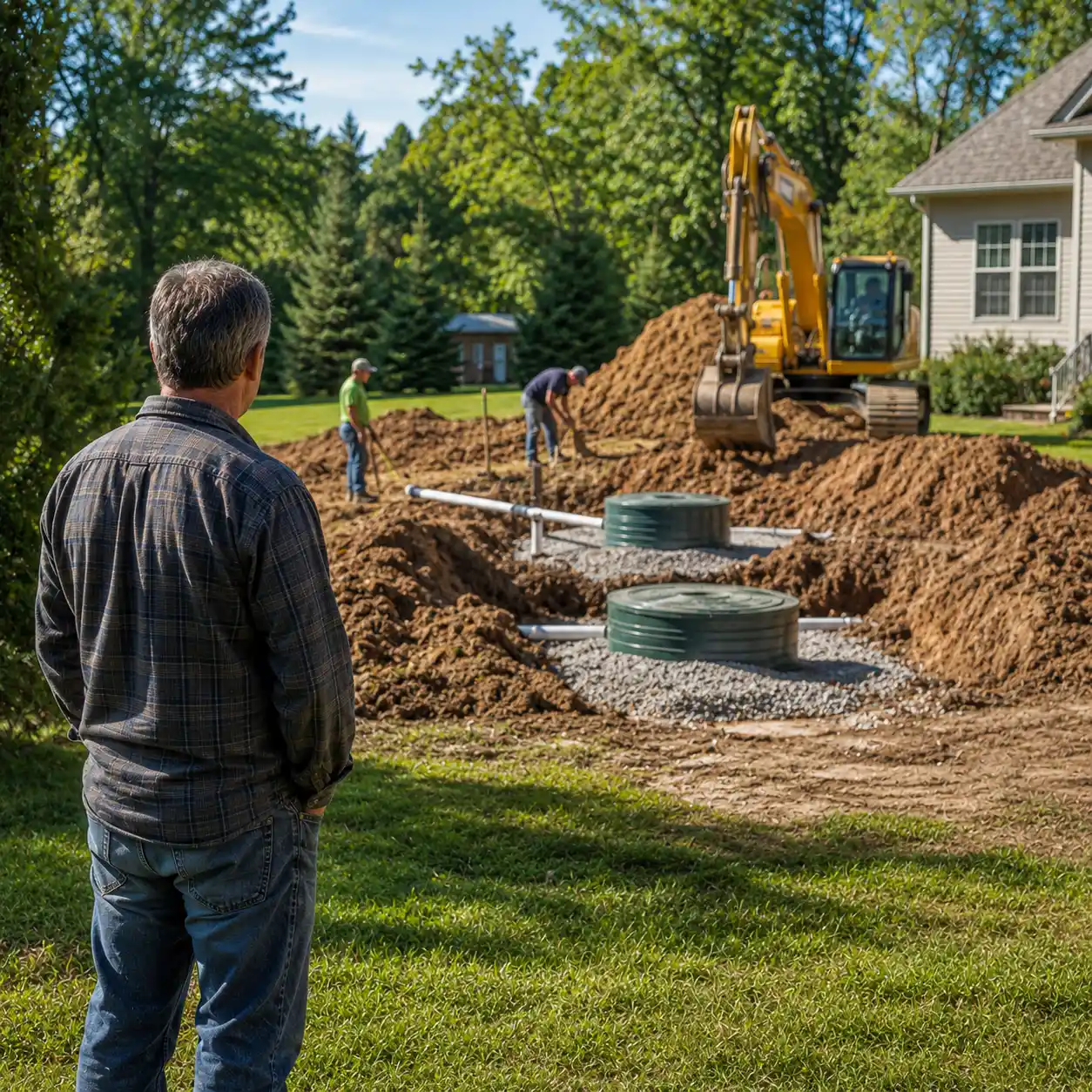
System Installation
For new construction or a full kitchen buildout that needs a properly sized system from the start.
Get Your Kitchen on a Compliance Schedule
Tell us about your kitchen and current schedule, if you have one, and we’ll set up service that fits your hours.
- Indoor traps and outdoor interceptors
- Flexible before-hours and after-hours scheduling
- Compliance documentation provided
- Buildup-rate tracking over time
- Recurring scheduled service plans
- One-time emergency cleaning available
Tell Us About Your Needs
We’ll reach out to confirm your appointment details.