Why Does My Backyard Smell Like Sewage?
A sewage smell outside can start in half a dozen different places, from a dry drain trap inside the house to an actual drain field problem in the yard. Here’s how to trace it back to the source, working from the house outward.
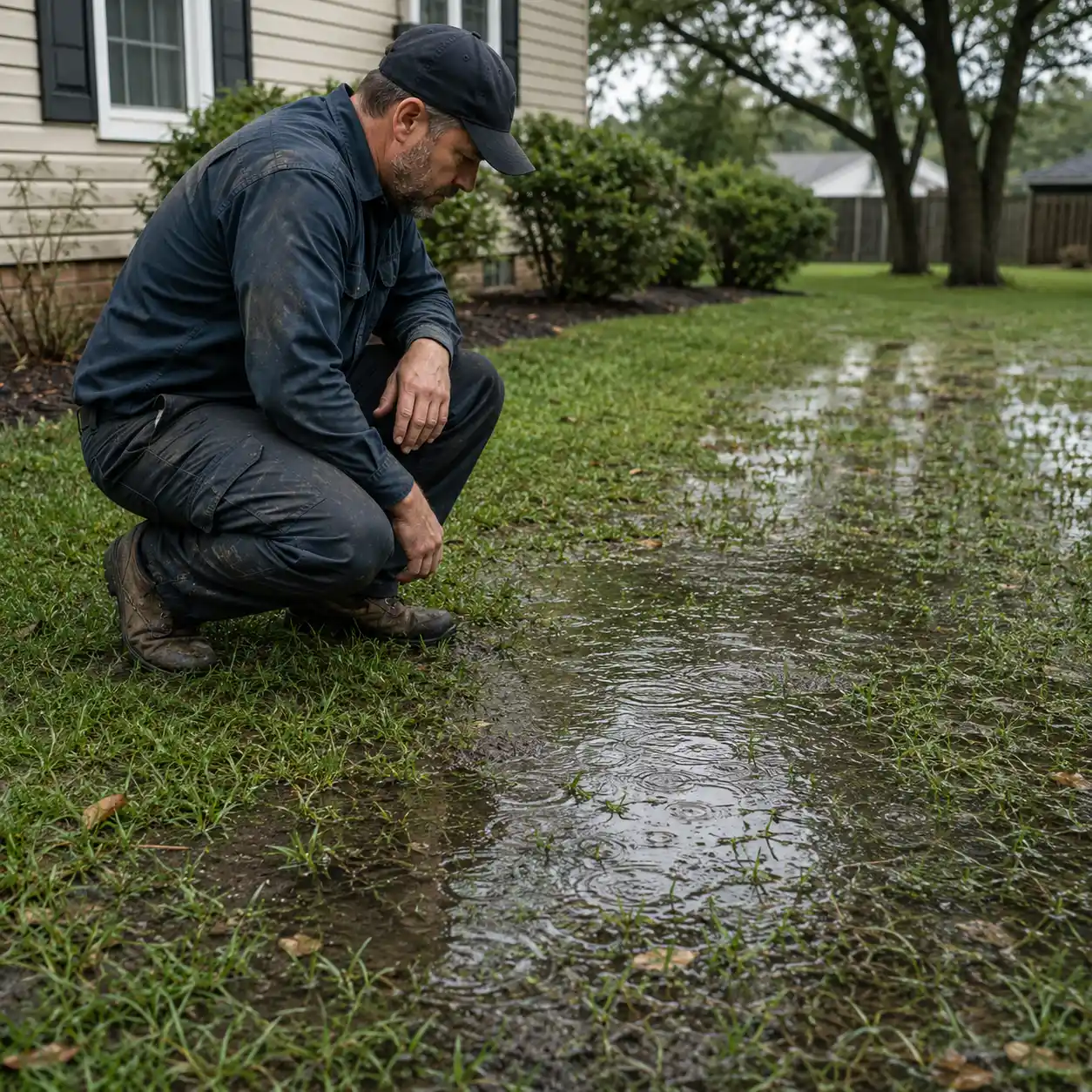
The Smell Usually Isn’t Coming From Where You’d Guess
The instinct when a sewage smell shows up outside is to walk straight to the septic tank and assume that’s the source. Sometimes it is. Just as often, the smell is coming from somewhere else entirely — a dry trap under a bathroom sink you rarely use, a loose vent pipe fitting on the roof, or a toilet seal that’s slowly failed without anyone noticing. Because sewer gas travels and drifts with the wind, an odor that seems to hang over the whole backyard doesn’t necessarily mean the whole backyard, or the septic system underneath it, is the actual problem.
The most reliable way to track it down is to start close to the house and work your way outward, since that mirrors how these odors typically originate. Here are the most common sources, roughly in the order worth checking.
1. A Dry P-Trap Under a Rarely Used Drain
Every drain has a curved trap designed to hold a small amount of water, which blocks sewer gas from rising back up into the house. A drain that hasn’t been used in weeks, like a guest bathroom or a basement floor drain, can lose that water to evaporation, opening a direct path for odor. This is a purely plumbing issue with an easy fix — running water down the drain for a few seconds restores the trap.
2. A Failed or Missing Toilet Wax Ring
The wax ring under a toilet seals the connection between the toilet base and the drain pipe below it. When that seal degrades, usually on an older toilet that’s never been reset, gas can leak out around the base rather than venting properly through the roof. This often smells strongest right at floor level near the toilet rather than diffusely throughout a room.
3. A Blocked or Damaged Roof Vent
Plumbing vent stacks are supposed to release sewer gas safely above the roofline. A vent blocked by leaves, a nest, or damage can force that gas to find another way out, sometimes down through the attic and into the living space, or venting at a low point outside where it’s more noticeable at ground level than you’d expect from a rooftop source.
4. A Tank Lid That Isn’t Sealing Properly
Once you’ve ruled out the house itself, the septic tank becomes the more likely source. A cracked lid, a riser that’s shifted out of place, or a lid that was never properly reseated after a previous service visit can all let odor escape at ground level right around the tank’s location.
5. A Tank That’s Overfull and Venting Excess Gas
A tank running close to capacity produces more gas relative to its remaining air space than one that’s recently been pumped, and that gas has to go somewhere. Even with an intact lid, a genuinely full tank can push a noticeably stronger odor than usual through its normal venting path.
6. A Drain Field That’s Surfacing Wastewater
This is the source most people assume first, and it does happen, but it’s actually further down this list because it’s less common than the causes above it. If the smell is concentrated over the drain field specifically, especially alongside standing water or unusually lush grass in that same area, a saturated or failing field is a legitimate concern worth having evaluated.
Can’t Pin Down Where the Smell Is Coming From?
We can trace it back to the actual source during a visit.
Request an Evaluation
Serving Woodstock and all six counties we cover.
Indoor vs. Outdoor Odor: What It Tells You
If the smell is noticeably worse inside the house than outside, that points toward one of the plumbing-related causes near the top of this list rather than the septic system itself. Walk through the house room by room with this in mind — an odor that’s strongest in one specific bathroom or near one particular drain is far easier to trace than one that seems to be everywhere at once.
If the smell is clearly stronger outside and gets more noticeable the closer you get to where the tank or drain field is located, that shifts the likely cause toward the septic system. Weather plays a role here too — humid days and the period right after rain tend to carry odors further and make them more noticeable than they’d be on a dry, breezy day, which can make a relatively minor issue seem more dramatic than it actually is.
What to Do About It
Start with the free checks. Run water in any rarely used drains for a few seconds, and take a look at toilets for any sign of movement or looseness at the base. If those don’t resolve it, a plumber can check vent stacks and wax rings quickly and affordably, since those are common culprits with straightforward fixes.
If you’ve ruled out the house and the smell is clearly tied to the yard, that’s when it’s worth having the septic system itself evaluated. We’ll check the tank lid seal, measure how full the tank actually is, and walk the drain field for any signs of surfacing, then tell you plainly which of these it actually turned out to be.
Let’s Track the Smell Back to the Source
Tell us where it’s strongest and when you first noticed it, and we’ll help you narrow it down.
- Tank lid and seal inspection
- Tank fullness and condition check
- Drain field walk-through
- Written findings on what we identify
- Honest referral if it’s a plumbing issue, not septic
- Serving all six counties we cover
Tell Us About Your Needs
We’ll reach out to confirm your appointment details.