10 Signs Your Septic Tank Needs Pumping
Most tanks don’t announce themselves clearly until they’re already overdue. Here are the signs worth paying attention to, and how many of them you’d expect to see before it’s actually urgent.
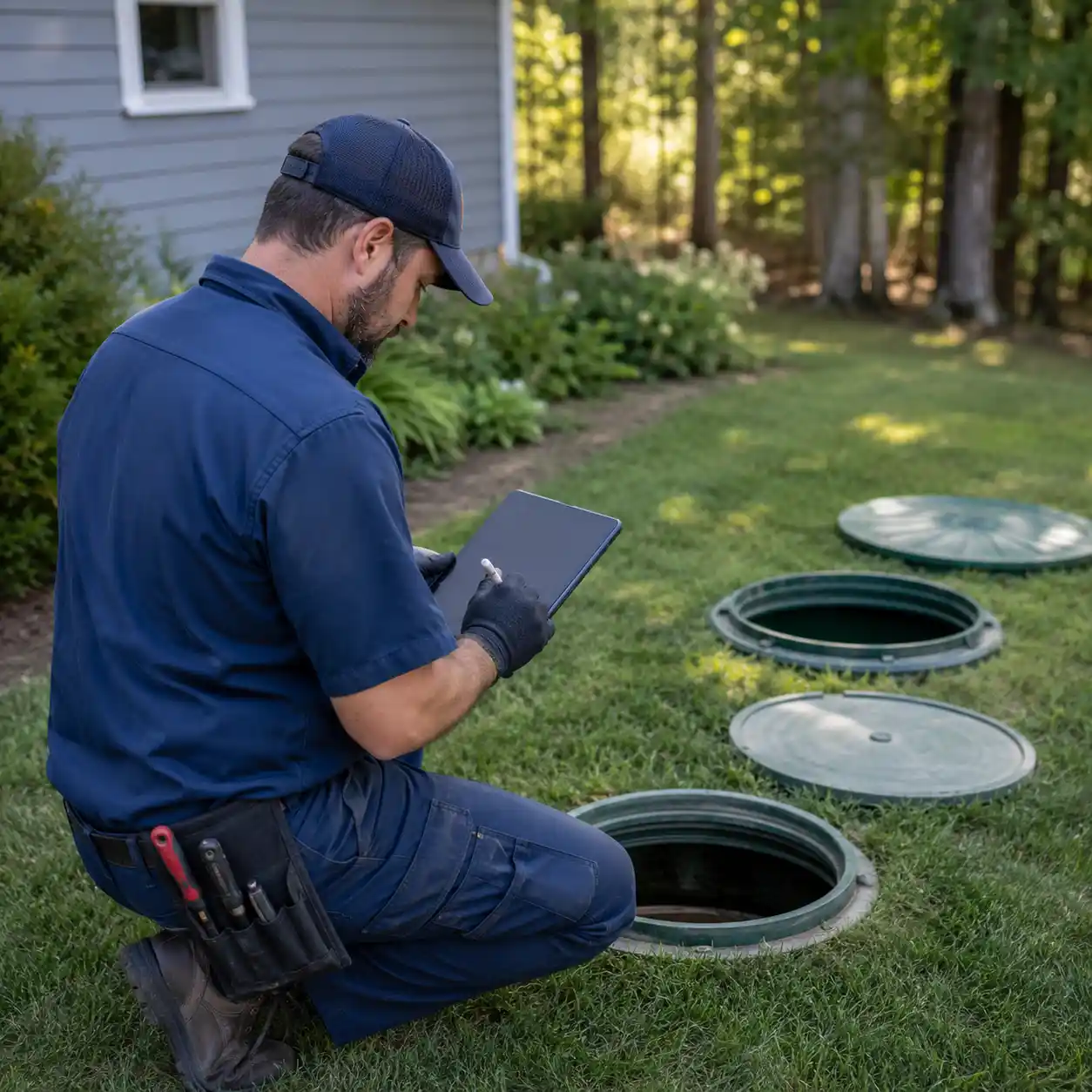
Most Tanks Give Warning — If You Know What to Look For
The common advice is simple: pump your tank every three to five years and you’ll never have a problem. That’s a reasonable baseline, but it assumes every household uses water the same way, which isn’t true. A tank serving six people with a garbage disposal running daily fills differently than one serving a retired couple who rarely cook at home, and the calendar alone won’t tell you which situation you’re actually in.
What actually tells you more than the calendar is a set of physical signs your system produces as it approaches capacity. None of these on their own is necessarily an emergency, but the more of them you’re noticing together, the more overdue your tank likely is.
1. It’s Been Three to Five Years, or You Genuinely Don’t Know
This is the baseline sign, and it’s worth starting here even though it’s the least dramatic. If it’s been more than five years, or if you honestly can’t remember the last time anyone serviced the tank, that alone is reason enough to schedule a check, regardless of whether you’re noticing any other symptoms yet.
2. Drains Throughout the House Are Running Slower Than Usual
A single slow drain is often just a local clog. Slow drains in multiple rooms at the same time, especially if they all started around the same period, points toward something happening further down the line, like a tank that’s running out of usable capacity and pushing back against normal flow.
3. Toilets or Drains Are Gurgling
A gurgling sound when you run water elsewhere in the house is air being displaced somewhere it shouldn’t be. A tank nearing capacity has less room to absorb the sudden volume that comes with a flush or a washing machine draining, and that pressure often gets pushed back toward the house as exactly this kind of noise.
4. There’s a Sewage Smell Near the Tank or Anywhere in the Yard
An odor near the tank lid, or a sour smell drifting across the yard, particularly after rain, is one of the more reliable outdoor signs. A tank operating normally shouldn’t be venting a noticeable smell at ground level on a regular basis.
5. Standing Water or Soft, Spongy Ground Over the Tank
If the ground directly over the tank stays noticeably wetter or softer than the surrounding yard, and it’s not tied to a recent rain, that can mean the tank is full enough that liquid is finding its way up around the lid rather than staying contained and flowing out properly to the drain field.
6. A Patch of Grass Over the Tank Is Noticeably Greener Than the Rest of the Yard
This one surprises a lot of people, since lush grass sounds like a good thing. In this context, it usually means extra moisture and nutrients are reaching the grass roots from a tank that’s leaking or overflowing slightly at the surface, effectively fertilizing that one strip of lawn more than the rest of the yard.
7. The Lowest Drain in the House Backs Up First
A basement floor drain or the lowest-level bathroom backing up before anything upstairs does is a classic sign of a system that’s full and pushing back through the path of least resistance. Gravity means the lowest point in the house’s plumbing shows problems first.
8. Multiple Fixtures Are Affected at the Same Time
If flushing the toilet affects the shower drain, or running the washing machine backs up a sink, that cross-fixture pattern is a stronger signal than any single slow drain on its own. Isolated problems tend to be local plumbing issues; problems that show up everywhere at once tend to trace back to the tank.
9. Your Household Has Grown, or You’ve Had a Lot of Extra Guests
A tank sized for the household that lived there when it was installed doesn’t automatically adjust when a family grows, a relative moves in, or you host a full house for an extended holiday visit. If your household water use has genuinely increased and you haven’t adjusted your pumping schedule to match, you’re likely due sooner than the standard interval would suggest.
10. You Bought the House and Have No Maintenance History at All
If you’re a relatively new owner and the previous owner didn’t pass along any service records, that’s reason enough to get a baseline check regardless of whether you’re seeing any of the symptoms above yet. It’s far better to establish where things stand on your own terms than to find out during an actual backup.
Recognize a Few of These?
Get your tank checked before it turns into a bigger problem.
Schedule Pumping
Serving Woodstock and all six counties we cover.
Why Ignoring These Signs Gets Expensive
A tank that’s simply overdue for pumping is one of the cheapest problems in the entire septic system to fix — it’s a routine service call, not a repair. The real cost comes from what happens if it’s ignored long enough. Once a tank is full enough that solids start washing out toward the drain field instead of staying behind, you’re no longer looking at a pumping bill. You’re looking at potential drain field damage, and on the clay soil common through our service area, a compromised field is a meaningfully larger and more expensive project than a full or partial replacement would have been if the tank had simply been pumped on schedule.
In other words, the signs on this list are your system’s way of giving you a cheap warning before it becomes an expensive one. Catching two or three of them early is a good outcome, not a failure.
What to Do If Several of These Sound Familiar
One or two signs on their own, especially the calendar-based one, are a reasonable prompt to schedule routine pumping without any urgency attached. If you’re noticing three or more together, particularly anything involving standing water, odor, or backups affecting multiple fixtures, it’s worth treating that as a near-term priority rather than something to schedule around a convenient weekend a few months out.
Either way, a pumping visit will tell you definitively where you stand — actual sludge and scum levels inside the tank are a far more accurate measure than any symptom checklist, ours included. We measure both on every visit and can tell you honestly whether you were right on schedule or genuinely overdue.
Get Your Tank Checked Before It Backs Up
Tell us which signs you’re noticing, if any, and we’ll get you scheduled.
- Routine pumping on a 3–5 year cycle
- Overdue tank pumping
- Sludge and scum measurement included
- Baffle and lid condition check
- Written service record
- Serving all six counties we cover
Tell Us About Your Needs
We’ll reach out to confirm your appointment details.