Why Do My Toilets Gurgle When I Flush or Run the Sink?
That bubbling sound is air trying to escape somewhere it shouldn’t have to. Here’s what actually causes it, ranked from the harmless end of the spectrum to the one that means your septic system needs a look.
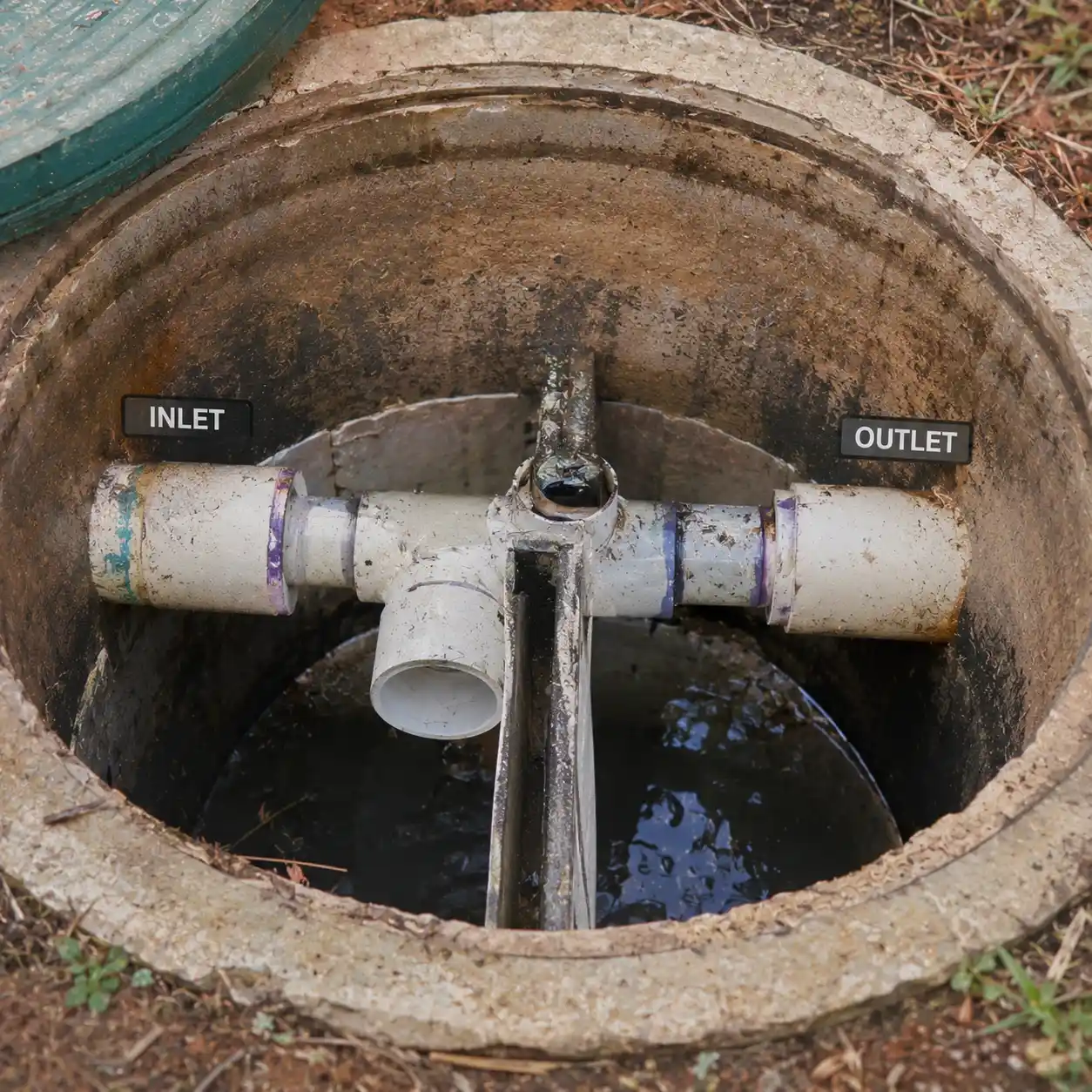
A Normal Plumbing Noise, or an Early Warning Sign?
Most people notice this the same way: you run the kitchen sink, or take a shower, and the toilet across the hall makes a bubbling or gurgling sound like it’s trying to talk back. The instinct is usually to shrug it off as “old pipes” or ignore it until it happens enough times to become annoying. Neither reaction is quite right.
Gurgling is air being displaced somewhere in your plumbing system and forced back out through the path of least resistance, which is usually the nearest toilet or drain. What the quick explanation leaves out is that where that trapped air is actually coming from can range from a completely harmless venting quirk to a genuine sign that your septic system is struggling to keep up. The sound is the same either way. The cause underneath it is not, and figuring out which one you’re dealing with is what actually matters.
Cause 1: A Partially Blocked Roof Vent
Every plumbing system relies on vent stacks that run up through the roof to let air in and out as water moves through the pipes. Without that airflow, water draining out of one fixture would create a vacuum that pulls air, and sometimes water, from the nearest trap instead — which is exactly what a gurgle sounds like. Roof vents can get partially blocked by leaves, a bird’s nest, or in colder snaps further north, frost. This is the least serious cause on this list, and it’s a plumbing issue rather than a septic one, but it’s worth ruling out first since it’s also the easiest and cheapest to fix.
Cause 2: A Partial Clog Inside the House’s Drain Lines
Hair, soap scum, grease, and general buildup inside your home’s own drain lines can narrow the pipe enough to restrict airflow without fully stopping water flow. This tends to show up as gurgling localized to one area of the house, like a bathroom near a kitchen that shares a drain line, rather than throughout the whole house. This is also a plumbing repair rather than a septic system problem, though it’s worth mentioning to whoever comes out, since a homeowner and a technician often can’t tell the difference over the phone.
Cause 3: A Septic Tank That’s Overdue for Pumping
This is where it starts becoming a septic issue rather than a plumbing one. As a tank fills with settled solids and the accumulated scum layer, the usable air space inside the tank shrinks along with the liquid capacity. A tank running close to full has less room to absorb the sudden volume of water and air that comes with a flush or a load of laundry finishing its drain cycle, and that pressure can get pushed back up the line toward the house instead of moving forward the way it’s supposed to. Gurgling that happens throughout the house, especially after multiple fixtures are used close together, points more toward this than toward a single blocked drain.
Cause 4: A Saturated or Struggling Drain Field
If the tank is fine but the drain field underneath it isn’t absorbing liquid the way it should, wastewater has nowhere to go once it leaves the tank. That backup works its way upstream, and the plumbing in the house is often where it shows up first, well before you’d notice anything unusual outside. This is the more serious end of the septic-related causes, since a struggling field, especially on the clay soil common through our service area, can move from “occasional gurgle” to “actual backup” faster than homeowners expect once it starts.
Cause 5: Root Intrusion Into the Main Line
Tree and shrub roots are drawn to the moisture inside a sewer or septic line and will grow into even a small crack or joint given enough time. A root mass slowly closing off the main line between the house and the tank creates the same kind of partial restriction as a clog, but it’s outside the house and usually gets worse gradually rather than all at once. This tends to show up as gurgling that’s slowly increased in frequency over months rather than appearing suddenly, which is a useful clue if you’re trying to figure out how urgent your situation actually is.
Gurgling That Won’t Go Away?
We’ll trace it back to the actual cause instead of guessing.
Schedule a System Check
Serving Woodstock and all six counties we cover.
How to Tell How Urgent It Actually Is
Pay attention to pattern and scope. Gurgling limited to one fixture, especially one near a specific drain run in the house, leans toward a plumbing explanation rather than a septic one. Gurgling that happens across multiple fixtures, or that shows up specifically when a high-volume appliance like a washing machine or dishwasher is draining, leans the other way, since that’s exactly the kind of sudden volume that exposes a tank or field that’s already near its limit.
Timing tells you something too. A sound that’s been happening consistently for a long time without getting worse is a different situation than one that started a few weeks ago and has been getting more frequent since. The second pattern usually means whatever’s causing it is progressing, whether that’s a tank filling up on schedule or a field slowly losing capacity, and it’s worth having looked at before it turns into an actual backup rather than just a noise.
When to Stop Waiting and Call Someone
If the gurgling is happening throughout the house, if it’s been getting more frequent, or if you genuinely don’t know when your tank was last pumped, that combination is enough reason to get it checked rather than keep monitoring it. None of those signs on their own necessarily mean an emergency, but together they’re the kind of pattern that tends to end in an actual backup if it’s left alone much longer.
If you’re not sure whether what you’re dealing with is a plumbing quirk or something the septic system needs to handle, that’s a completely reasonable thing to not know on your own — most homeowners can’t tell from the sound alone, and neither can we without actually looking at the tank. A straightforward inspection settles it either way, and if it does turn out to be nothing more than a vent that needs clearing, that’s genuinely good news worth having confirmed.
Get to the Bottom of the Noise
Tell us where and when it happens, and we’ll help you figure out whether it’s plumbing or septic.
- Full tank and drain field check
- Baffle and vent-related diagnosis
- Root intrusion assessment
- Written findings, whatever the cause
- Straight answers, not upsells
- Serving all six counties we cover
Tell Us About Your Needs
We’ll reach out to confirm your appointment details.