Sewer Line Problem or Septic Tank Issue? How to Tell the Difference
In parts of our service area, the house two doors down might be on city sewer while yours is on septic, and plenty of homeowners genuinely don’t know which one they have. Here’s how to figure it out, and what the symptoms mean once you know.
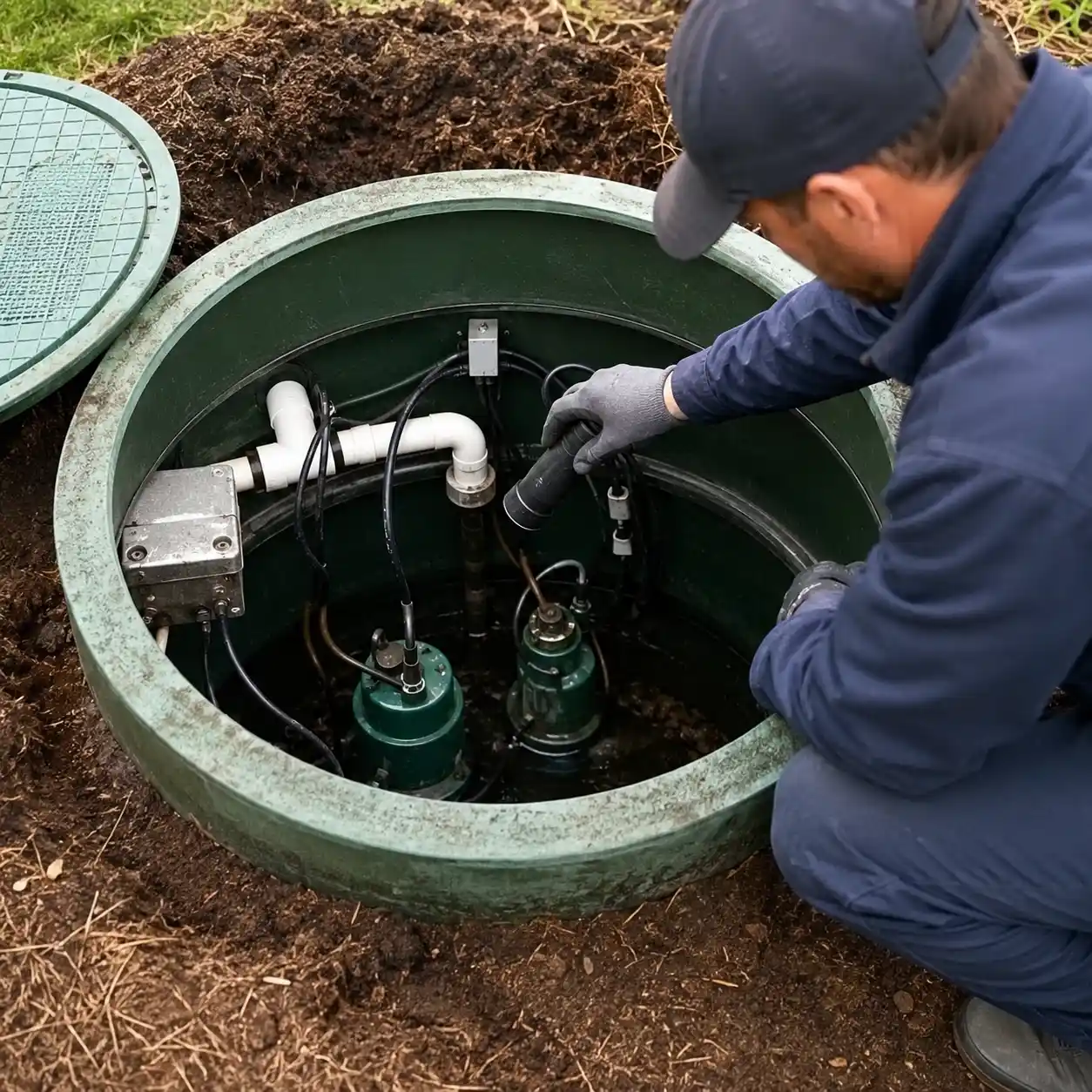
A More Common Mix-Up Than You’d Think
Most homeowners assume this is obvious — either you have a septic tank in the yard or you don’t. In practice, plenty of people who’ve lived in the same house for years have never actually confirmed which system they’re on, especially if they bought a resale and the previous owner never mentioned it. That’s a bigger problem than it sounds like, because a backup or slow drain calls for a completely different fix depending on which one you have.
This confusion is especially common in towns like Woodstock, Canton, and Kennesaw, where the older core of town has been on municipal sewer for years while streets just a few blocks away, often built before or shortly after that infrastructure went in, are still on septic. Two houses that look nearly identical from the street can be running on completely different systems.
How to Tell Which System You Actually Have
Check Your Water Bill
If you’re on municipal sewer, your water bill will almost always include a separate sewer charge alongside the water usage charge. If that line item has never appeared on your bill, that’s a strong early sign you’re on septic. This is usually the fastest way to check without leaving the house.
Look for a Tank Lid or Riser in the Yard
A septic tank has to be somewhere on the property, and on many homes there’s a visible lid, riser, or a slightly raised or settled patch of ground that hints at where it sits. This isn’t foolproof, since older tanks are sometimes buried deep enough to leave no visible trace, but it’s worth a quick walk around the yard before assuming either way.
Ask the County for On-Site Sewage Records
County environmental health offices keep permitting records for septic systems, and many will confirm whether a specific address has one on file. This won’t always turn up results for very old installations that predate modern recordkeeping, but it’s a solid step for anything built in the last few decades.
When in Doubt, Just Ask
If none of the above gives you a clear answer, a quick call to either your city or county utilities department or a local septic company will usually settle it fast. There’s no downside to asking, and it beats guessing wrong and paying for the wrong kind of service call.
If You’re on Septic: Signs the Problem Is Yours to Fix
Only Your Address Is Affected
A septic system is entirely self-contained on your property. If a neighbor a few doors down is having the exact same issue at the exact same time, that points away from a private septic problem and toward something shared, like a municipal line.
Symptoms Track With Your Own Water Use
If drains get noticeably worse after a load of laundry, a full house of guests, or back-to-back showers, that’s consistent with a septic system that’s being pushed close to its capacity. A municipal sewer problem generally doesn’t respond to your household’s specific usage pattern the same way.
You’ve Got Standing Water or Odor in the Yard
A wet or foul-smelling patch on your own property, especially somewhere that could plausibly be a drain field, is a septic-specific symptom. Municipal sewer problems don’t typically surface in a homeowner’s yard the way a struggling drain field does.
It’s Been Years Since Anyone Serviced the System
If you know you’re on septic and genuinely can’t remember, or don’t know, when it was last pumped, that alone makes a septic cause more likely than a municipal one, regardless of what the specific symptom looks like.
If You’re on Sewer: Signs to Call the City or a Plumber Instead
Neighbors Are Having the Same Problem
A blockage or backup in a shared municipal line often affects more than one property at once, particularly homes on the same street or block. If you’re hearing similar complaints nearby around the same time, that’s a strong sign the issue is upstream of your own property.
The Backup Traces to the Street-Side Connection
If a plumber traces the problem to the line running from your house out toward the street, rather than anything closer to the house itself, that’s generally a sewer lateral issue, which may involve the city depending on where exactly the blockage sits.
There’s No Septic Tank Anywhere on the Property
If you’ve confirmed through records or a physical search that there’s genuinely no tank on your lot, then by definition the problem isn’t a septic one, no matter how similar the symptoms look to what a struggling drain field would produce.
Still Not Sure Which One You Have?
We can confirm it during a visit, no guesswork required.
Request an Evaluation
Serving Woodstock and all six counties we cover.
Why This Mix-Up Happens So Often Around Here
Towns like Woodstock, Canton, and Kennesaw grew outward from a small historic core, and municipal sewer infrastructure generally followed that same pattern, expanding gradually rather than covering an entire town all at once. That leaves pockets, sometimes just a handful of streets, that were built before sewer lines reached them and have simply stayed on septic ever since, surrounded by more recently developed or annexed areas that are fully sewered.
Add in the number of homes that have changed hands multiple times, sometimes without the septic system ever coming up explicitly during a sale, and it’s easy to see how a homeowner ends up years into ownership without a clear answer. This isn’t a sign of anything being done wrong by anyone involved — it’s just a natural byproduct of how these towns actually grew.
What to Do If You’re Still Not Sure
If you’ve gone through the steps above and you’re still genuinely uncertain, that’s a completely reasonable place to land, and it’s not worth guessing your way into the wrong kind of service call. A septic evaluation will tell you definitively whether there’s a tank on the property and, if there is, what condition it’s in — and if it turns out you’re on municipal sewer after all, we’ll tell you that plainly and point you toward the right kind of help instead of trying to sell you something you don’t need.
Either way, knowing which system you actually have is worth settling once, rather than re-litigating it every time something backs up.
Let’s Confirm What You’re Working With
Tell us what you’re experiencing and what you already know about your system, and we’ll take it from there.
- Septic system confirmation and location
- Full tank and drain field evaluation
- Honest referral if it turns out to be a sewer issue
- Written findings you can act on
- No pressure, no guessing
- Serving all six counties we cover
Tell Us About Your Needs
We’ll reach out to confirm your appointment details.